Can Tree Roots Damage a Concrete Base?

If you are planning a concrete base in a Milton Keynes garden and there is a mature tree nearby, it is sensible to ask whether the roots could cause problems later on. We see this sort of situation regularly, particularly in established gardens where trees, paving, old sheds and other structures have been there for many years.

The short answer is yes, tree roots can contribute to problems with a concrete base, but it is not normally as simple as roots physically pushing a properly installed slab upwards. In most cases, the condition of the ground underneath the base is more important than the root itself.

The type of soil, the size and position of the tree, the existing ground conditions and how the concrete base is prepared all need to be considered before the concrete is poured.

Can Tree Roots Physically Lift Concrete?

People often imagine a large tree root growing underneath a concrete base and simply forcing the whole slab upwards. That can happen with lighter surfaces such as paving, paths and poorly supported garden structures, but a properly constructed concrete base is a different matter.

A thick root does not normally have the ability to lift a substantial, well-supported concrete base simply because it gets bigger. What can happen, however, is that roots interfere with the ground around a structure or contribute to movement in the soil.

This is why, when we come across a proposed base close to an established tree, we do not just look at the visible roots. We look at the whole area that the base will occupy and consider what is happening underneath the surface.

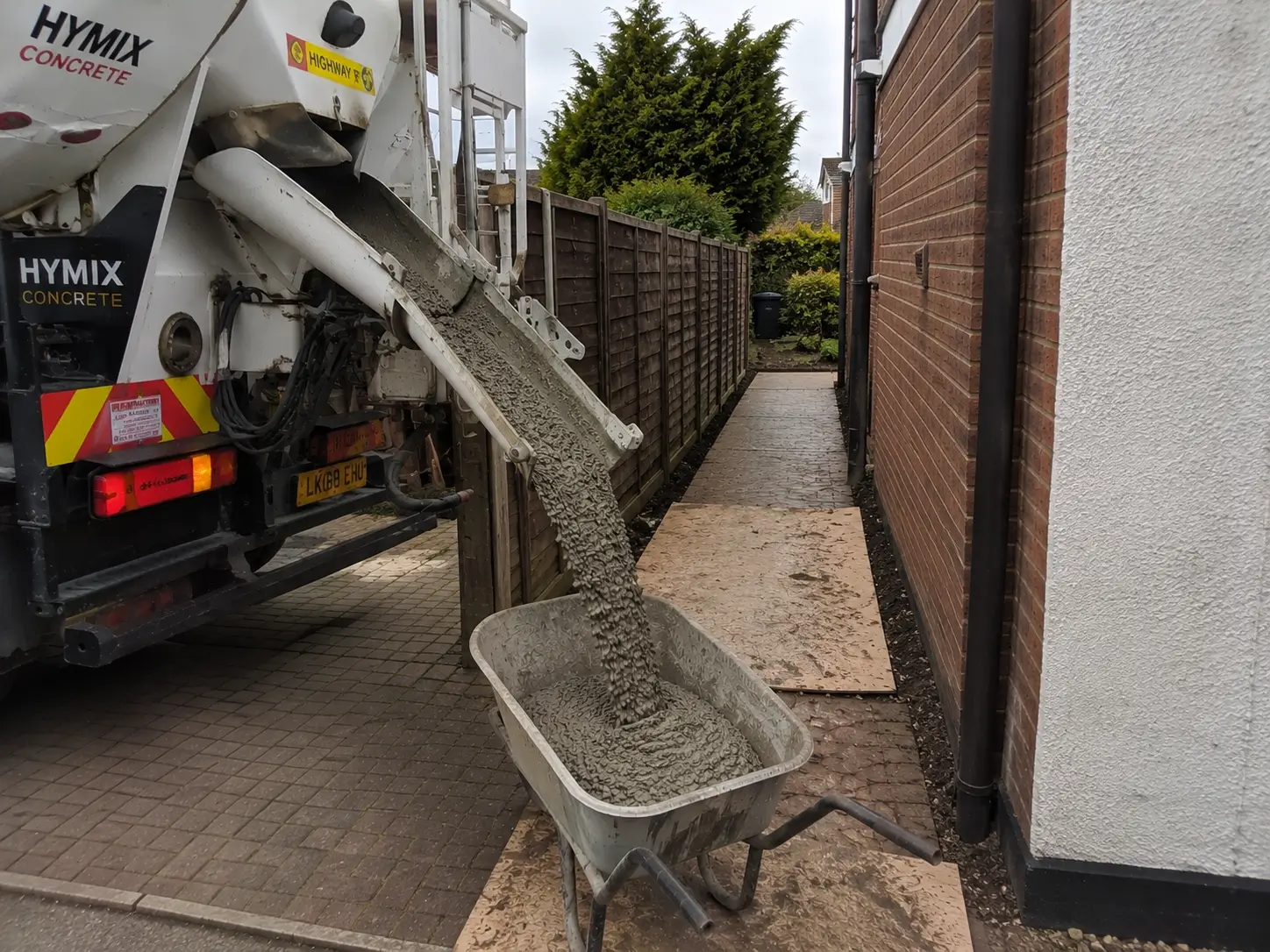
Concrete base installation work in a residential garden

The Bigger Issue Is Often The Soil

One of the main concerns with trees and foundations is not the physical pressure of the root. It is the effect the tree can have on the moisture content of the soil.

This matters particularly where shrinkable clay soil is present. Tree roots can take substantial amounts of moisture from the ground. If the soil dries and shrinks beneath or around a foundation, the supporting ground can move.

That movement can affect a structure if the foundation or concrete base has not been designed and prepared appropriately for the conditions underneath it.

Trees, Clay And Ground Movement

The combination of a mature tree, shrinkable soil and an unsuitable foundation is where the real concern lies. The risk is not the same on every property, which is why there is no sensible one-size-fits-all distance that can be applied to every tree and every concrete base.

UK guidance also recognises that trees can affect structures through soil movement, particularly where shrinkable soils are involved. For further information, homeowners can refer to UK government guidance on trees and property.

What We Look For Before Installing A Concrete Base Near Trees

If there is a tree close to the proposed base, the first thing we do is assess what is actually there rather than make assumptions from the tree trunk alone.

The Position Of The Tree

We look at how close the tree is to the proposed base and whether the tree is mature, established or relatively young. A large established tree needs more consideration than a small ornamental tree planted recently.

The Existing Ground

The surface may look perfectly solid while the ground underneath tells a different story. We consider what is already present, whether the area has previously supported a shed or other structure, and whether there are signs of soft spots, previous excavation or ground movement.

Visible Roots

Roots may be visible at the surface, particularly around established trees. They can also extend beyond the area immediately surrounding the trunk. During excavation, we therefore pay attention to what is actually encountered rather than simply digging through everything and carrying on regardless.

The Structure Going On Top

A concrete base for a lightweight garden structure is not necessarily approached in exactly the same way as a base intended to support a heavier building. The proposed use, dimensions and loading all form part of the assessment.

What Happens If Roots Are Found During Excavation?

This is one of the reasons experienced groundwork matters. You do not want someone to arrive with an excavator, cut through whatever is in the way and only start asking questions afterwards.

If roots are encountered, the situation needs to be considered properly. The size and position of the root, the tree involved, the proposed base and the surrounding ground all matter.

It is also important not to assume that every root found beneath a proposed concrete base needs to be removed. Unnecessary root cutting can affect the health and stability of a tree, and protected trees can also be subject to additional controls.

Where there is a genuine concern about a substantial tree or significant roots, specialist arboricultural advice may be appropriate before construction decisions are made.

Can A Concrete Base Be Installed Near A Tree?

In many cases, yes. Gardens across Milton Keynes have trees close to sheds, outbuildings, patios and other structures without automatically causing problems.

The important point is that the base should be designed and prepared around the actual site. Simply pouring concrete over an existing patch of ground because it looks level is not the approach we would recommend where there are known ground or tree-related concerns.

A proper installation normally involves clearing unsuitable material, excavating to the required level, preparing a suitable sub-base and compacting it before the concrete is placed. Depending on the project, reinforcement and additional measures may also be required.

The aim is to give the concrete a stable platform rather than expect the slab itself to compensate for poor ground preparation underneath it.

Signs That An Existing Concrete Base May Have Been Affected

If you already have a concrete base near a large tree, look for changes rather than assuming the tree is responsible for every crack.

Cracking, uneven levels, sections that appear to have moved or gaps developing around the edge of the slab can all justify closer inspection. However, these symptoms can also be caused by poor sub-base preparation, drainage problems, frost, settlement or other ground conditions.

That distinction matters. We have seen plenty of situations where a tree gets blamed simply because it is nearby, when the actual problem is that the original base was poured onto unsuitable or poorly compacted ground.

If a concrete base has moved significantly, it is better to establish why before simply breaking it out and pouring another slab over the same problem.

How We Approach Tree-Related Concrete Base Work

When we carry out concrete base work in Milton Keynes, the job starts with the ground and the intended structure rather than the concrete itself. We look at the proposed footprint, access, existing surface, excavation requirements and anything nearby that could affect the installation.

If a mature tree is close to the proposed base, that becomes part of the site assessment. We consider what is visible, what is likely to be encountered during excavation and whether the project requires additional professional input.

This is generally the safest way to approach it. A concrete base should be prepared for the ground it is actually sitting on, not built from a standard assumption that every garden is the same.

For homeowners planning a new shed or outdoor building, our concrete shed foundations service explains more about preparing a suitable foundation for that type of project.

Request Advice About A Concrete Base Near Tree Roots

If you are planning a concrete base in Milton Keynes and there is a mature tree close to the proposed position, it is worth discussing the site before excavation starts.

Let us know roughly where the tree is, where you want the base installed and what structure will be going on top. If you have an existing concrete base that has cracked or moved, it is also useful to explain what has changed and when you first noticed it.

The more we understand about the ground and the proposed project beforehand, the easier it is to plan the installation properly and identify anything that needs further investigation.

📞 Call For A Free Quote